Calculating quilt backing is one of the most important steps in quilting, yet it’s also one of the most confusing parts for both beginners and experienced quilters. Many quilters feel confident designing their quilt tops, choosing beautiful fabrics, and piecing blocks together—but when it comes to the backing, confusion often sets in. How much fabric do you really need? Does the fabric width matter? What about seam allowances, shrinkage, or directional patterns? All these questions, along with measuring errors, can lead to wasted fabric, unexpected shortages, and unnecessary frustration.
Learning how to calculate quilt backing provides clarity and confidence. Whether you’re quilting a baby blanket, a throw, or a king-size quilt, backing fabric must be measured correctly. It provides the structural support of the quilt, ensures smooth quilting with fewer puckers, and gives the finished piece a polished look. And because backing requires larger cuts of fabric compared to quilt tops, even a minor mistake can cost time and money.
Fortunately, calculating backing doesn’t have to be complicated. With accurate measurements, a clear understanding of fabric widths, and simple formulas, any quilter can determine the right amount of fabric needed. Even better, you can speed up the entire process using a quilt backing calculator, which removes the guesswork and reduces the chance of error.
This comprehensive guide explains everything you need to know—from formulas to piecing options, fabric choices, quilt sizes, and helpful tools. Whether you’re quilting for fun, gifting your creations, or preparing quilts for sale, mastering quilt backing calculation will make your quilting process smoother, more efficient, and more enjoyable.
Quilt Backing Calculator
To save time and avoid miscalculations, you can use our Quilt Backing Calculator, which instantly determines how much fabric you need based on your quilt’s dimensions, seam allowances, and fabric width. Instead of manually converting inches to yards or figuring out whether you need one, two, or three fabric panels, the calculator does everything automatically.
It’s perfect for quilters who want quick, accurate results without the stress of manually calculating measurements.
Quilt Backing Calculator
What Is Quilt Backing and Why Does It Matter?
Quilt backing is the large piece of fabric that forms the bottom layer of your quilt. Together with the batting and quilt top, it helps create the quilt “sandwich.” While the top showcases your design and the batting adds warmth, the backing provides stability and ties the entire piece together.
A good backing:
- Supports quilting stitches
- Keeps the quilt structurally sound
- Prevents shifting or stretching
- Contributes to the quilt’s overall durability
- Enhances the appearance of the finished piece
Types of Backing Fabrics
Quilters typically use:
- Cotton fabric (42–44″ wide) – Most common and easiest to piece
- 108″ wide-back fabric – Great for large quilts, often eliminates seams
- Flannel – Cozy and soft, ideal for winter quilts
- Minky or fleece – Thick, plush backing for comfort-oriented quilts
Backings that are too thin or stretchy can cause issues during quilting. High-quality cotton is generally recommended because it handles stitching well and maintains shape.
Why Correct Calculations Matter
- Prevents running out of fabric mid-project
- Ensures proper alignment and enough allowance for quilting
- Avoids costly over-purchasing
- Reduces seams and fabric waste
- Makes the quilting process smoother and more professional
Quilt backing forms half of the finished quilt’s visible surface—so getting it right is essential.
How to Calculate Quilt Backing Step by Step
Calculating quilt backing requires three key measurements:
- Finished quilt size
- Extra allowance for quilting and trimming
- Fabric width and piecing requirements
Step 1: Measure the Finished Quilt Size
Add 4–8 inches to both the length and width of your quilt. This ensures the backing extends beyond the quilt top, giving enough margin for quilting.
For example, if your quilt top is:
60″ × 80″
Add 8″ in each direction:
Final backing size = 68″ × 88″
This extra room allows quilting machines to grip the fabric securely.
Step 2: Determine Fabric Width
The most common fabric widths include:
- 42–44″ quilting cotton (usual width)
- 54″ fabric
- 60″ fabric
- 108″ wide-back fabric (ideal for large quilts)
Fabric width determines how many panels you’ll need.
Step 3: Calculate How Many Panels You Need
If your quilt backing width (e.g., 68″) exceeds the fabric width (typically 42″), then you need 2 or more panels, sewn together with a vertical or horizontal seam.
Example using 44″ fabric:
44″ fabric − ½” seam allowance = around 43″ of usable width.
68″ ÷ 43″ ≈ 2 panels needed
Step 4: Determine the Required Yardage
Multiply the number of panels by the quilt backing length.
If quilt length = 88″
Panels needed = 2
Total length needed:
88″ × 2 = 176″
Convert inches to yards:
176″ ÷ 36″ = 4.88 yards
Round up: 5 yards
This is your total yardage needed.
Understanding Fabric Widths When Calculating Backing for a Quilt
Fabric width is one of the most influential factors in determining quilt backing yardage. Many quilters default to 42–44″ wide fabric, but exploring other widths can simplify your project.
42–44″ Quilting Cotton (Most Common)
- Requires piecing for most quilts over 40″
- Best for beginners
- Simple to handle during quilting
- Inexpensive and widely available
54″ Fabric
- Less common but useful for throws
- May allow fewer seams
- Good for quilts around 50″ wide
60″ Fabric
- Often used for knits, flannel, or fleece
- Good for cozy or winter quilts
108″ Wide-Back Fabric
- Ideal for queen and king quilts
- Saves time by eliminating piecing
- Provides a seamless finish
- Often more expensive but easier to use
Even though wide-back fabrics cost more per yard, you often need fewer yards, making them economical for large quilts.
Methods for Piecing Quilt Backing
1. Vertical Seam Backing
The most common method, where two or three fabric panels are sewn together vertically.
- Works best for most quilts
- Minimizes visible seams
- Easy to align
2. Horizontal Seam Backing
Less common but useful for smaller quilts.
- Suitable when using wide fabric
- Helpful for directional prints
3. Wide-Back Fabric (No Seams Needed)
Perfect for large projects such as queen or king quilts.
- Seamless, smooth quilting surface
- Saves time during construction
4. Matching Directional Prints
If your fabric has patterns (like stripes or flowers), careful matching is needed.
- Requires extra fabric
- More time-consuming
- Creates a professional finish
5. Scrappy Backing
Great for using leftover fabric.
- Creative and economical
- Popular for modern or improvisational quilts
- Requires thoughtful arrangement
Common Quilt Sizes and Their Backing Requirements
Below are standard quilt sizes and guidance for backing calculations. These are approximate and may vary by style, border width, and shrinkage.
Baby Quilt (36″ × 52″)
- Often uses one full panel of 42–44″ fabric
- Requires minimal piecing
Throw Quilt (50″ × 65″)
- Usually requires 2 panels of 42–44″ fabric
- Total yardage: ~3.5–4 yards
Twin Quilt (70″ × 90″)
- Always requires piecing with 44″ fabric
- Wide-back fabric available for seamless backing
- Estimated yardage: 5 yards
Full/Double Quilt (85″ × 108″)
- Typically requires two vertical seams
- Best done with 108″ wide-back fabric for easier assembly
Queen Quilt (90″ × 108″)
- Commonly backed with 108″ fabric
- Yardage: About 3 yards of wide-back
King Quilt (110″ × 110″)
- Most challenging size
- 108″ wide fabric recommended
- Yardage: 3 yards wide-back OR pieced backing: 8–9 yards
These measurements include allowances for quilting and trimming.
Tips for Choosing the Best Quilt Backing Fabric
Choosing the right backing fabric ensures your quilt stays beautiful and durable.
1. Look for High-Quality Cotton
Cotton is stable, reliable, and ideal for quilting.
2. Consider the Quilt’s Purpose
- Baby quilts: soft flannel
- Bed quilts: sturdy cotton
- Decorative throws: patterned backing
3. Be Mindful of Color Bleeding
Test your fabric first by soaking a small swatch.
4. Prewash Backing Fabric
Reduces shrinkage and removes excess dye.
5. Avoid Stretchy or Thin Fabrics
They shift during quilting and cause puckering.
6. Match Backing to Theme and Colors
Although backing often shows less, creative designs make the quilt reversible.
7. Use Tools to Make Backing Easier
You can explore additional quilting tools on CalculatorPress.com, where you’ll find calculators designed to simplify DIY and crafting tasks.
For in-depth exploring of fabrics and quilting techniques, websites like The Spruce Crafts offer excellent information for quilters of all skill levels.
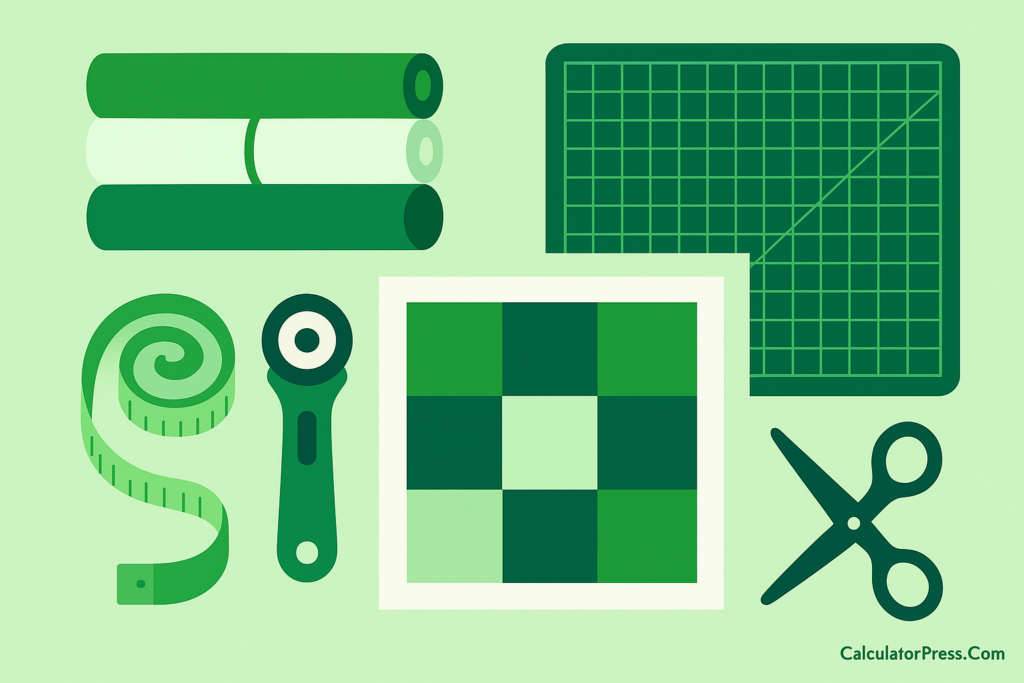
Tools and Resources to Improve Quilt Backing Measurements
Precision tools make cutting and measuring quilt backing more accurate.
Rotary Cutter
Provides clean, straight cuts.
Cutting Mat
Protects surfaces and includes measurement markings.
Quilting Rulers
Helps ensure square corners and accurate measurement.
Design Software
Quilting apps visualize how backing pieces fit together.
Quilt Backing Calculator
The easiest method to get precise yardage—especially for large quilts or directional prints.
You can learn more about quilting fabric measurements through reliable resources like The Spruce Crafts, an authority in crafting education.
FAQ About How to Calculate Quilt Backing
1. How much extra fabric should I add for backing?
Add 4–8 inches to each side of your quilt to ensure enough allowance for quilting.
2. Do I need to prewash backing fabric?
Prewashing is recommended to prevent shrinkage and color bleeding.
3. Can I use 108″ wide fabric for any quilt?
Yes, wide-back fabric reduces seams and saves time for most quilt sizes.
4. How do I calculate backing for directional prints?
You may need additional fabric to match patterns across seams.
5. How do I calculate quilt backing for a queen-size quilt?
Most queen quilts require about 3 yards of 108″ wide-back fabric.
6. Is seam direction important in backing?
Vertical seams are most common, but horizontal seams work for smaller quilts.
7. Is wide-back fabric more expensive?
Yes, but often you need fewer yards, making it cost-effective for large quilts.
8. What if my fabric is too narrow?
You can piece multiple panels or create a scrappy backing using leftover fabric.
Conclusion
Learning how to calculate quilt backing is a powerful skill every quilter should master. Whether you’re creating small baby quilts or large bed quilts, accurate backing measurements ensure smooth quilting, prevent fabric shortages, and help create beautifully finished quilts. With a clear understanding of fabric widths, seam allowances, quilt sizes, and piecing options, you can calculate backing with confidence and precision.
And if you want to simplify the process even further, our Quilt Backing Calculator is the quickest way to determine exactly how much fabric you need—no math required. As you explore more quilting tools and resources, feel free to visit CalculatorPress.com, where you’ll find useful calculators for crafting, quilting, sewing, and everyday tasks.
With the right methods and a little planning, quilt backing becomes easy, enjoyable, and stress-free—so you can focus on the creative side of quilting.